Showing posts with label Sidney Sheldon. Show all posts

Sunday, March 15, 2015

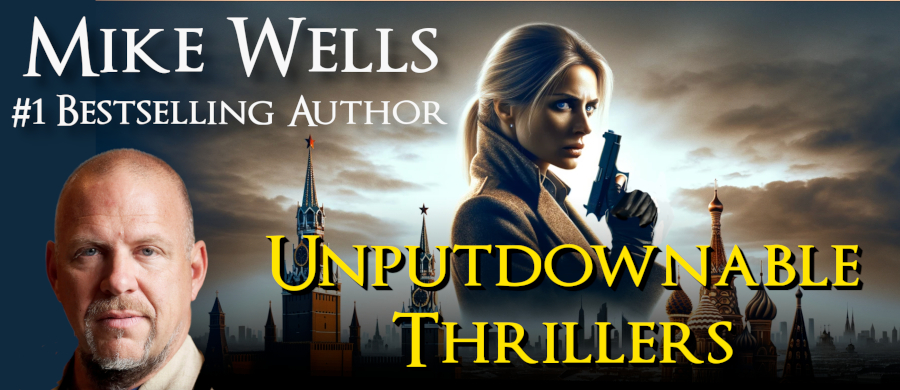
Interview with Bestselling Thriller & Suspense Author Mike Wells

Translation:  Wild Child 3 is coming soon!
(Note:  This interview was conducted by Fiona Mcvie and posted on her blog, reposted by me with her permission)

Name: Mike Wells
Age: Let’s put it this way: When  I was a kid,  color TV was a big deal

Fiona:  Where are you from?
I call Nashville, Tennessee my hometown but did not actually move there until I was twelve, lived in Rochester, New York, Cleveland, Ohio and Wichita, Kansas before that.  My dad was in sales.  Now I split my time between Latvia, my wife’s home country, and Cyprus.

Fiona:  A little about your self and your education Family life etc.?

I was not a very good student, though I somehow managed to finish engineering school at Vanderbilt University and eventually got a Ph.D. in that field.  I became an entrepreneur and later, an “authorpreneur,” which is what I am now.

Fiona: Tell us your latest news?
My most recent release is a book I coauthored with bestselling romance author Devika Fernando.  It’s a romantic thriller series called Forbidden.  In a few weeks (early April) I will be releasing Book 3 of my Wild Chid sci-fi adventure series, the final book of the first trilogy.

Fiona: When and why did you begin writing?
I have been writing ever since I can remember, though did not seriously start with fiction until I was in my early twenties.  By “seriously” I mean trying to entertain readers (rather than just myself) and get my work published.

Fiona: When did you first consider yourself a writer?
If you mean a fiction writer, I did not consider myself a “real” writer until significant numbers of people started buying my books and giving them good reviews.  For me, this is the only way I would be comfortable giving myself that title, as least as a professional.

Fiona: What inspired you to write your first book?
Inspiration is a difficult thing for me to pin down, even now.  I really don’t know where a lot of my ideas come from or what makes me feel a burning desire to create a full-blown novel out of one.  Probably it has to do with a subconscious need to live out the issues the characters struggle with in the story.  That’s what a psychologist would say, I think.  A big part of it, though, comes from an idea that I think is original and one that my readers would like.

Fiona: Do you have a specific writing style?
Yes, I think I do.  My style seems to be unusually cinematic and engaging–readers often tell me that they can clearly visualize everything that’s happening my books and that they have a vivid experience in being in the hero’s or other characters’ shoes.  This is not merely a coincidence.  My writing journey progressed from short stories to screenplays to full-length novels, and the screenwriting experience in the middle had a major impact on my style.  Writing for the screen also required me to learn to create a lean, focused “unputdownable” story that keeps the audience or reader engaged at a very high level.  We live in a world where people have more and more distractions and options to entertain themselves–movies, TV, videoclips, music, social networking, gaming, etc. and its growing all the time.  Authors who write novels are competing with all of that, all of the time–if a story drags or meanders, people can just push a button and do something else.  You have to keep the reader nailed to the page at all times.

Fiona: Is there a message in your novels that you want readers to grasp?
No, I don’t consciously put “messages” in my books, as I think that would come off as preachy no matter how subtly I might try to do it.  I personally don’t like preachy stories.   That said, I am sure there are expressions of my views about life in my books, but they are there just because they’re there, and I would never try to summarize them outside of the story, that’s not my job.  My job is to write and the readers’ job is to analyze and interpret (if they see fit–most readers do not spend much time on that)

Fiona: Are your stories based on someone you know, or events in your own life?
Yes all my stories to some extent are based on my own experiences, places I have been and people I have known, but everything is heavily disguised, switched around, one bit taken from one place/person and another from somewhere else.  There are no “real” people or events in my books.  Everything is a fantasy, made up.

Fiona: What books have most influenced your life most? a mentor?
I don’t think there are any books or authors I could say influenced me the most.  A few that I think are masters of drama and storytelling (and this includes some screenwriters) are David Mamet, Rod Serling, Sidney Sheldon, Thomas Hardy, and Thomas Harris.

Fiona: Name one entity that you feel supported you outside of family members.
Interestingly, Dr. George Cook, my Ph.D. advisor and close friend, even though he is an engineering professor.  He has always appreciated my fiction writing ability and been a great source of support.

Fiona: Do you see writing as a career?
It already is for me, yes.  I make a full-time living from my fiction writing now, which to me, is pretty amazing, considering how long it took me to get here (20 years).

Fiona: If you had to do it all over again, would you change anything in your latest book?
Nope.  Once they are done, they are cast in stone.  I move on and do not look back, though I often take reader feedback and incorporate it into the next book.

Fiona: Is there anything you find particularly challenging in your writing?
As I said before about reader engagement, keeping the story tightly focused and moving relentlessly forward is always a challenge.  To make each book “unputdownable,” so to speak.  Also, weaving in subplots into the main plot can involve a lot of cursing and hair-pulling (this is why I don’t have much hair left).  In general, it is a big challenge to write a very lean, focused stories and cut out everything that is not relevant in some way to the tales I’m telling.  I think most newbie writers tend to go off on tangents and get excited about putting a whole lot of stuff (description, characterization, etc.) that simply doesn’t need to be there and actually hurts the overall impact of the story (waters it down and bores readers) rather than making it better.  I know I did.  “Less is more” is my mantra these days, but of course you can’t take this too far or the style will be too bland.  Striking a good balance is the key.

Fiona: Do you have to travel much concerning your book(s)?
No.  I wish I did!  I am part of the new digital-only breed of author now.  While this is helpful for reaching readers all over the world, the downside is that I have very little face-to-face contact with readers and other authors, only chatting via social networks.  It’s just not the same as face-to-face contact.  I miss that.  I hope the situation changes, somehow.  I would like to teach in another creative writing program, for example–I taught for several summers in the one at University of Oxford.

Fiona: Who designs your covers?
I design all my own covers.  I have always dabbled in art and can muster up enough skill to put together a book cover, which is a part of the creative process I enjoy.  I see my books not just as manuscripts but complete packages, including the cover images and descriptions.  All of it matters.  All these pieces should fit together and form one smooth and pleasing whole.  I want to get the whole package exactly the way I want it.

Incidentally, this is the main reason I chose to be an indie author and publish my own books rather than having them traditionally published.  I don’t believe my books will ever get the same level of treatment by 9 to 5 employees of a Big 5 publishing house, for example.  People can argue with me all they want about this, but no one can convince me otherwise, I’ve been there.  At the end of the day, nobody is going to put the same amount of meticulous, loving energy and effort into a book as the author.  This is just common sense.  Your book is “your baby.”  For authors who do not have the skill set to publish and market their own books, traditional publishing is probably a good thing, or for people who are keen on getting awards and critical recognition.  For me, these latter accolades would be nice, but not worth the price I would have to pay giving up creative and marketing control.

Fiona: Do you have any advice for other writers?
I do, at least for new fiction writers:  learn as much as you can about DRAMA.  I think this is one of the best kept secrets to writing a good novel.  Most people read fiction to be entertained, and I think a lot of new authors miss that simple point.  Readers don’t read to be impressed by your vocabulary or your amazing ability to describe a sunset or babbling brook.  They want to be moved, emotionally.  This means catching the reader up in the drama of the story, with the conflicts that characters face with each other and within themselves.  If you want to write a good novel, yes, you should have a decent command of the English (or whatever) language, but study dramatic structure, know how to create and sustain narrative tension and keep the reader turing those pages to find out what happens next.

Fiona: Do you have anything specific that you want to say to your readers?
Yes, I thank each and every one of you from the bottom of my heart.  Without you, writing would be pointless.  I know some authors do not feel this way, but for me, unless I know there are people out there itching to get their hands on my next book, or unless I can at least pretend that there are such people out there, finding the motivation to fight my way through an entire novel would be nearly impossible.

Fiona: Other than writing do you have any hobbies ?
I love the outdoors and like swimming, cycling, running, hiking, scuba diving and a lot of other outdoor sports.

Fiona: What TV shows/films do you enjoy watching?
At the moment I completely addicted to Mad Men and House of Cards.

Fiona: Favorite foods / Colors/ Music
Italian/blue/jazz

Fiona: If you were not a writer what else would you like to have done?
I would like to have been the next best thing:  a roller coaster designer for theme parks

Thanks so much for interviewing me, Fiona!

READERS:  Stay tuned for the Wild Child 3 release and, after that, Lust, Money & Murder, Book 6! Both of these books will complete trilogies (Wild Child 1, 2 & 3 and Lust, Money & Murder 4, 5 & 6.  Also, both of these trilogies will be offered as three-book bundles.

Sunday, January 18, 2015

Passion, Power & Sin, Audiobook 1 Now a FREE Download (4.5 Hours, Unabridged!)


Passion, Power & Sin, Book 1, is now a free unabridged download from Soundcloud.  If you've never listened to an audiobook before, this would be a good time to try one out, as this audiobook comprises 4 1/2 hours of absolutely free entertainment and is already a highly rated listen on Audible (average review of Books 1-5 is 4.3 stars).  Expertly narrated by LA voice artist Karin Allers, with theme music by London-based composer Adisha Kariyawasam, you can either listen to this audiobook online or download to your device (for offline listening) from the links below:

Listen or download PP&S Book 1 chapter by chapter (as playlist)
Listen or download the entire PP&S book 1 (will play while downloading)

Enjoy!

Monday, July 7, 2014

Audiobook Release of Passion, Power & Sin and Interview with Narrator Karin Allers

Passion, Power & Sin, Books 1-5, has just been released in audio format!  Narrated by professional voice artist Karin Allen, this is an especially good deal for Audible members.  The audiobook is unabridged and runs almost 21 hours, yet just counts as one Audible credit.  Also, if you don't have an Audible account, you can listen to the entire series free by signing up for a 30 day trial membership, which can be cancelled any time during the trial period.  This is one of my most popular books, with an average of 4.6 stars on Amazon reviews.  

Download links:  Audible  Amazon USA  Amazon UK  iTunes

Synopsis:

One spectacular financial scheme. One woman alone against the world. Young, beautiful, and yearning for love, Heather Bancroft meets the "perfect" man...and is lured into a game in which she begins to make more money than she ever imagined. Betrayed by her own innocence, she loses all that is dear to her and discovers that she has been mercilessly used. Defeated and broken, but surviving with sheer persistence and ingenuity, Heather emerges from her trying ordeal, determined to punish the ruthless man who destroyed her life. Her thirst for revenge takes her halfway around the globe, to the turquoise waters of the Mediterranean, where her nemesis secludes himself in obscene wealth that he's gained from the financial ruin of others. Heather is playing for the highest stakes in a lethal game. Only one man loves her - he's handsome, confident, and just as determined as she is. Only one man can stop her - a criminal mastermind who is intent on her destruction.

Here's a quick interview with Karin Allers, who has also narrated another one of my audiobooks, Baby Talk (horror/supernatural thriller genre)

Karin, can you tell us a little about yourself and your background?
I have been an avid reader all my life and a voice-actor since 2008

What led you to start narrating audiobooks? 
My love of reading.

What aspects of audiobook narration do you find the most challenging? 
Editing!

What parts do you enjoy the most? 
Bringing characters to life – telling stories that stir peoples imaginations

Do you have a studio in your home?
Yes

Do you do your own editing?
Yes

What's your recording schedule like for given audiobook and how do you pace yourself? 
I usually record about 4-5 hours a day – depending on my voice - the rest of my time is spent doing the business of my business....accounting, marketing etc.

What talents/skills are required to be a good audiobook narrator?
Connecting with the listener in addition to storytelling and the ability to bring characters to life.

Which character was your favorite to narrate in my books?
In Baby Talk – Old Man Snell was a hoot! In Passion Power and Sin I really identified with Heather aka Chantal.

What type of novels do you like to listen to/read yourself?
Psychological thrillers, romance  - I enjoy a lot of different types of novels. 

Do you have any advice for people who want to become audiobook narrators? 
Practice your storytelling skills and I think you must really enjoy reading

Do you have any advice for authors in hiring and working with audiobook narrators? 
Once you’ve chosen your ‘voice’ give them some insight into your characters and then let them go and trust that they’ll bring your story to life…

How can people get in touch with you?
Please visit my website at www.theredheadedvoice.com.

Also in Audio!
(Note:  you can download any of the below FREE by becoming an Audible member on a no-risk 30 day trial basis)

Lust, Money & Murder - International Thriller

The Drive-By Wife - Romantic Thriller

Baby Talk - Horror/Supernatural Thriller

The Mysterious Disappearance of Kurt Kramer - Paranormal Thriller

The Wrong Side of the Tracks - Coming of Age Thriller


Tuesday, August 27, 2013

Thriller Author Mike Wells Interviewed on The Carnage Report

The following interview is reprinted from The Carnage Report, August 26th, 2013

What inspired you to write?
 
For me, that's a little like asking what inspired a bird to fly, or what inspired a fish to swim.  I am a writer; writing is what I do.   I feel a strong urge to write each and every day, and I've had this urge as long as I can remember.  This urge is different from "inspiration," I think.  To me, inspiration is a kind of high, and like most highs--whether naturally or artificially induced--it wears off pretty fast. 

Inspiration might get me started on a book, but I could never actually finish a whole novel, which takes months or years, fueled by inspiration alone.  I would never get through that difficult middle part of the story, where, as the author, you have to struggle with the thorniest story issues.  

Did your family play a role in the development of your literary skills?

Definitely.  My mother is also a writer.  Some of my earliest memories are the sound of her tapping away on a typewriter, writing short stories and other pieces.  In fact, the sound of someone clicking away on a keyboard in the next room is very comforting to me.  Maybe I caught the desire to be a writer through some sort of osmosis, or it's in the genes, I don't know.  

My family, as well as my wife and her family, have always been very supportive of my writing.  They have grown along with me in their supportive roles, too.  My wife has learned to be a fantastic developmental editor and her mother, who is a retired journalist, also helps a lot with both the overall shaping of my books and marketing.

Do you have any literary influences on your work?

I'm sure I do, but I'm not that aware of them when I'm writing.   Stephen King, Rod Serling, Thomas Hardy, David Mamet and Sidney Sheldon have influenced me a lot.  I’ve dissected their books and screenplays in great detail, trying to understand how their plotting, characters, dialogue, and other story elements work. 

What do you think of the state of the book market at the moment?

The fact that ebooks are revolutionizing the publishing industry in a disruptive way has been a godsend to me.  The gatekeepers, the literary agents and editors who were the barriers in traditional publishing, are no longer in the way.   Now authors can easily self-publish and reach readers, and the general public decides which books are good and which ones are not. What could be fairer than that?  Of course, the negative side is that virtually anyone who can push buttons and put together strings of characters (not necessarily forming intelligible words or sentences) can publish.  

This makes it hard for good books to be discovered by readers.  However, the industry is still better under this more democratic model.  I wouldn't want the system to go back to what it was before, not that it would be possible now.  Having a relatively few “experts” wedge themselves in between authors and the reading public, for the purpose of deciding what people will read, is a terrible concept.  It is a formula for corruption.  

What inspired you to write Wild Child?

There's the I-word again!  I felt the urge to write Wild Child as a result of a dream that I had about a girl that I knew in high school -- in the dream, she challenged me to swim across a lake, and it seemed a more than a little dangerous.  When I woke up I thought, "Hm, that's an interesting situation" and felt a lot of energy underneath it.  I poured myself a cup of coffee and started writing the first scene.  The story grabbed hold and I wrote the entire thing in a very short period, in a kind of creative frenzy.

What advice would you lend to a budding writer who has already completed his first novel?

First, break out the champagne!  Ninety percent of the people who say they want to write a novel never actually start one, and ninety percent of those who start one never finish.  So by completing your first novel, you're in the upper 99th percentile.  You have every right to celebrate!

Now, for the not so good news.  As hard as it is to do, try to accept the fact that this first novel of yours is probably not a masterpiece.  There is little chance of it magically zooming to the top of the bestseller lists or that you will be hounded by a gaggle of paparazzi and crazed fans who all "want a piece of you."  If you try to publish your book via the traditional route, you will probably not even be able to find an agent willing to represent it.  If you self-publish it, it's likely that your book will just sit there online and be completely ignored.  I hate to sound so negative, but these are the facts.  Of course there are rare exceptions to this—you might happen to hit on subject matter and/or a style of writing that strikes a nerve in millions, and have your book “go viral,” but think this is a matter of luck more than anything else.

However, take heart:  if you decided to learn to be a baker, would you expect your first cake to be perfect and take the world by storm?   The layers would probably be sliding off each other, the icing job would look a bit sloppy, and it would taste a little off.  That's how your first book will be.  Accept it.  To write a good novel, a formidable set of skills must be mastered.  And, like baking or roller-blading or designing spacecraft, much of the learning comes through trial-and-error and experience.

The most important thing you can do is get your first book out there in front of as many unbiased readers as possible.  The operative word here is "unbiased."    Your mom will force a smile as she swallows that first piece of cake, suppressing a grimace, and a few people who you thought were your friends will lash out with unmerited criticism because they're envious that you turned out to be in that upper 1%.  As a new author, the only readers who are of value to you are total strangers, folks who have absolutely nothing to lose or gain by reacting openly and honestly.

There are a number of websites that allow writers to post books for free for the purpose of getting feedback, often from professionals--HarperCollins runs an excellent one (www.authonomy.com).  What I would recommend is posting HALF of your book, cutting that first part on a cliffhanger, and then see if people start asking you for the other half.  This is the only true litmus test for whether your writing is any good--if it is, people will want MORE.  Even friends or family won't ask for more unless they're hooked.

If you post half your book and nobody wants to read more, then you need to bite the bullet and start asking why, what's the matter with it?  This is where another 90% of wannabe authors drop off, the ones who cannot accept any negative feedback and falsely believe that great writers simply sit down and whip off masterpieces with no learning curve.  Taking this last difficult and often painful step forward will lead you to address the weak spots that you have in your writing, and you will be well on your way to success.

You have written a lot of books.  Which one was the hardest to write?

The Drive-By Wife, a psychological thriller which I am about to release, has definitely been the hardest book I've ever written.  I'm not saying this because it's my latest book and is heavy on my mind.  I say it because it's the book that's taken me the longest to write.  It amazes me to think that I started in…drum roll please…1995!  Eighteen years, folks, to finish one book.  Of course in terms of actual time it probably only took about a year and a half. 

 I got stuck in the middle of the story and every few years I pulled the half-finished manuscript out of the drawer and valiantly attacked it again, only to find myself yanking out my hair in tufts (which is why I don't have much now) and then finally saying, "I just can't nail this one," and putting it away.  It's very discouraging when that happens but you just have to keep the faith.  

Part of the reason this crime novel was so difficult is that it takes place between three characters and is almost "hermetically sealed," like an Agatha Christie mystery.  The character dynamics were hell to develop and get right.  But it's also because I simply didn't have the skill set to finish the book.  As I said earlier, writing a good novel requires mastering lots of skills, and the learning curve is never finished--this particular book really required me to stretch beyond anything I've written before.

Do you have a writing process?

Yes.  When I start on a new book I become very organized, get everything all lined up and ready to go, telling myself that unlike all the other books I've written, THIS one will go smoothly.  Then I start writing, trying to maintain that order, becoming more and more desperate as things begin to fall apart, and eventually I say "Oh, hell" and dive head-first into the deep end, struggling, choking on water, jumping all over the place in the story, half-drowning and fighting for dear life...and after a few months of this struggle, my wife finally drags me out and gives me CPR, and the first draft is done.  The rest is relatively easy.

For you, what comes first?  Character or plot?

That's one of those chicken-and-the-egg questions, because as you well know it's nearly impossible to separate the two.  Sometimes Character and Plot arrive together, unbidden, with a lot of fanfare, in a horse-pulled carriage, and they graciously step out and introduce themselves to me.  Other times I have to round up a posse to go track one or the other of them down, and I often find them cowering in a cave somewhere, refusing to come out. 

Interestingly, Billy, the villain and most memorable character in The Drive-By Wife, appeared out of nowhere in a scene in another story I was writing in a completely different genre.  Billy was so fascinating that I simply took that scene and started developing a plot around him, one that would really let him shine as a villain.  

Conversely, in Lust, Money & Murder, the plot came first.  I had an idea that there might be a criminal somewhere out in the world who could counterfeit U.S. paper money so well that the fakes would be indistinguishable from the real thing.  So I had the plot first, and then I needed to create interesting characters who would fit that plot, a villain and a hero.  

But if you want to know the truth, these two elements, plot and character, come at me much faster and much less distinctly than it sounds here--whenever I'm working on a story idea, the characters and plot hit me almost simultaneously and I jump back and forth between the two very rapidly--I mean, ten times back and forth in five minutes, that kind of thing. 

So the two elements shape each other until the overall story is nice and round, everything works from both a character and plot point of view.  In fact, that's the most difficult part of writing for me, going back and forth and massaging the plot and character until it all fits together seamlessly.

Do you have any new releases in the pipeline?

Yes, as I mentioned previously, The Drive-By Wife will be released shortly (around September 1st).  This is a psychological thriller about a young, upper middle-class couple who are terrorized by a seedy truck driver who becomes obsessed with the wife. He tries to blackmail the couple into letting him spend the night with her each time he passes through town. My wife describes it as “Cape Fear” meets “Psycho.” 

Following The Drive-By Wife, I plan to have Lust, Money & Murder, Books 4, 5 & 6, out by the end of the year, in time for the holiday season.  This will feature the same characters, including the villain, who was in the first series.
I want to say that I appreciate the opportunity to give this interview, and to thank you for asking such good questions.


Connect with Mike on twitter @MikeWellsAuthor or visit Mike's site here,

Also, you can purchase Mike's books at Amazon here

Sunday, June 26, 2011

A Tribute to the Late, Great Sidney Sheldon

Author Sidney Sheldon
A few days ago, a reviewer of my book Lust, Money & Murder said “Not since Sidney Sheldon has a male author captured the female perspective so well.  You’ll be hooked!”

I was deeply moved by this comment.  So moved, in fact, that I decided to write a post about Mr. Sheldon. 

Why?

Because Sidney Sheldon was my favorite contemporary author, and he was my hero.  It’s not at all surprising that he had a tremendous influence on my writing.

Born in 1917, Sidney Sheldon first worked as a screenwriter in Hollywood, winning an Academy Award, and then went on to become one of the world’s bestselling novelists, penning 19 books over the last 35 years of his life.  Sidney Sheldon books have been translated into over 50 different languages and sold over 300 million copies.  He died at the ripe age of 89, still writing.

Sidney Sheldon was not my hero because of all the books he sold.  Sidney Sheldon was my hero for the countless hours of entertainment he gave me and millions of other lucky readers.   Curling up in a chair and reading the latest Sidney Sheldon book was the literary equivalent of eating a moist slice of Death by Chocolate cake, an experience you relished every moment of and left you hungry for more.

His plots were packed with twists and surprises.  Do you remember in The Other Side of Midnight when you found out that the obnoxious bum that came on to the hero was actually a decorated air force pilot?  Or when the assassin in Memories of Midnight turned out not to be one of the three men you suspected, but the meek office boy the hero befriended?  Of course you do—these literary moments are unforgettable.

But Sidney Sheldon’s books provided far more than entertaining plot twists.  His heroes were truly inspirational, strong women who also maintained their softness and femininity.   Even though I'm a man, his books gave me hope when I was down, inner strength when I was weak, and gave me the courage to pick myself up again after my most dismal failures. His books were so engaging that I could become completely absorbed in them, so much so that when I finished, I often had new perspective on things.

Who can forget Jennifer Parker’s struggle to become a successful lawyer in a men’s world in Rage of Angels?  Or Tracey Whitney’s determination to avenge her mother’s death in If Tomorrow Comes?   Sidney Sheldon’s characters never gave up, yet even the most ambitious protagonists always showed tenderness and compassion.
.
But probably the biggest reason that Sidney Sheldon is my hero that he wrote to entertain.  Unlike many authors, he did not put on airs, show off his knowledge of obscure French phrases, or try to impress you with how beautifully he could describe a sunset.  He entertained you.  Period.  He nailed you to the first page and kept you turning them all the way the end of the book, increasing the tension to the point where you’d stay up all night just to know how it all turned out!

This is precisely what I aim to do in my books.  Whether I succeed or not is up to readers to decide.  But it’s not surprising that many people see similarities to my work and Sidney Sheldon's.

For Sidney Sheldon was not only my hero. 

He was my greatest teacher.