Showing posts with label self-publishing. Show all posts

Tuesday, November 20, 2018

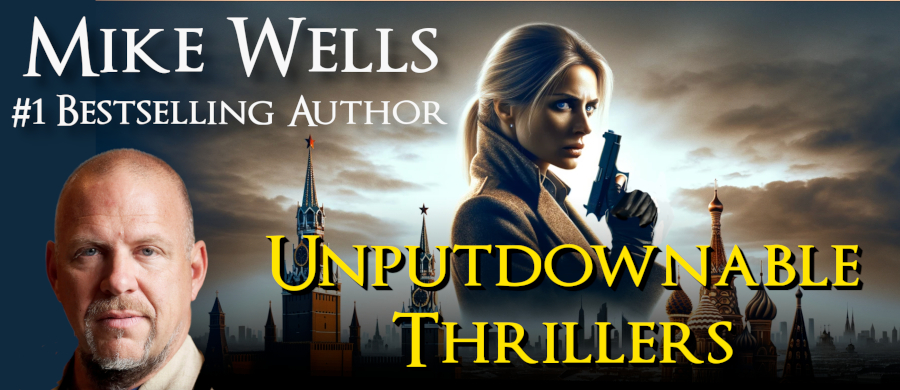
Book Covers that Sell


Everyone is familiar with with the old adage, "Don't judge a book by its cover," yet most people do it anyway. We can't help it.  It's human nature.

Therefore, if you're a self-published author and you want to sell your book, you must have a good, effective cover.  It is the first point of contact that readers have with your work.

What makes an effective book cover?
  • The cover must look professional.  If it looks sloppily put together or "homemade," readers will assume that the content is similar.  
  • The cover must fit its genre, but the same time, it must stand out from the crowd.  This is one of the trickiest aspects. Wanting your book to look like other big sellers in your genre is natural, but nobody ever became truly successful by imitating other people. Your book cover should fit the genre but be as original as possible so that it attracts attention and readers want to click on it to find out more.
  • The cover must not be too "busy" or detailed. Many authors make the mistake of trying to tell the entire story with the book cover. If you try to do that, you'll end up with nothing but a confusing mess. The "less is more" rule definitely applies to book cover design. A similar mistake is wanting any people shown on the cover to look exactly like the characters in your novel. This is not important - your book cover's main job is to attract attention and provide readers with a "flavor" of your book.
  • The cover must look good, with the title legible, at larger thumbnail sizes (about 80x120 pixels on Amazon, for example).  This is crucial. If it merely looks like an indistinct smudge, readers are very likely to pass it over.
Of course, effective book cover design is part art and part craft. At the end of the day, you have to use your instincts and go with what you think will best sell your book, and you will often end up testing several covers before you find the one that works best.

How can you have your cover designed? Although its possible to do it yourself, unless you have some experience in book cover design, what you'll end up with will probably look amateurish, even though it may not look that way to yourself.  Therefore, I would recommend hiring a professional designer.

I offer this service to other authors by working with the same graphic designer who creates my own covers, and my rates are competitive.  If you're interested, please contact me at mike (at) mikewellsbooks.com and tell me about your book.


Thursday, October 8, 2015

Interview on the Writing With Red Book Blog

Note:  This interview was conducted by Red Thomas and posted on his Writing With Red blog - you can read the original here and check out his other excellent reviews and author interviews.


Interview with Authorpreneur Mike Wells, the Master of Unputdownable Fiction     


Welcome to a special interview with the self-published author Mike Wells, a multi-genre writer whose books are consistently rated four stars and above by readers, publishing what he calls “unputdownable” stories. Wells’s focus has been on pushing his content to a cheaper, more readily available media format, and as such he is an advocate for eBooks in today’s market. I previously reviewed several installments of Lust, Money & Murder my blog and found them to be fast-paced thrillers packed with action and drama.

Now that you know a little about Mike Wells, let’s see what he’s working on, as well as his thoughts about his work, trends, and new media.


What are you working on now?
Right now I’m focused on the next trilogy in my Lust, Money & Murder series—Books 7, 8 and 9. This story has snowballed and taken directions I never could have predicted back when I wrote the first trilogy five years ago. My latest experiment was to post the newest book I was working on, the sixth, serially on my blog, as a free read for anyone who was interested and was willing to join my VIP Reader List. This advance review copy proved to be quite a success, with around 1,000 people reading it by the end, and I plan on doing this with all my future books. It has a lot of advantages for both me and my readers—they give feedback as I go, catch typos and continuity errors—but at the same time it gets the book into their hands a few months faster. Of course I will also publish the books the usual way when the serialization is complete, for those who don’t care for that approach or would simply rather download the whole thing at once.
What was your favorite piece to write?
I don’t really have favorite pieces, any more than a parent could have favorite children. If any part of a book is not fun to write, I simply don’t write it, or stop writing it and delete that part. If it is no fun for me, or feels laborious or like a struggle, then it will probably feel that way to readers, too. There is no place for this in any book if you are trying to produce gripping, “unputdownable” fiction.
You have quite a few books and series. If someone hasn’t read your work before, where do you think should they start?
Probably you should start with Lust, Money & Murder, simply because Book 1 is free. This is my most popular series, and if you like it, there are more books in that series to enjoy than in any of the others.
You offer free advice on your website to help other writers. I LMM 12 &3 LUST NEW BRAND FINAL 200 px with borderdo know other writers who are willing to help each other out, but usually it’s strictly people they work with—This way they know when they’ve made an impact or can better control the flow of information. You’re a different case, giving away bits of information you’ve had to work for from the bottom up. What makes you want to share?
Well, I think what you may be getting at is why I don’t not want to share or hold my cards close to my chest. I have been a creative writing teacher for a long time, and what I’ve found is that the vast majority of people don’t ever do anything with this sort of information anyway, no matter how good it is, and the few who are going to do something with it figure it out anyway, so why not help them along? Besides, writing down what I know to share it with others clarifies the principles in my mind and helps me, too.
What made you decide to self-publish, and how did you go about doing it?
Hard to say exactly where the publishing industry is heading. The advent of eBooks and the ability to self publish, digitally, for free has certainly shaken up the apple cart. I decided to self-publish simply because I am a control freak and highly opinionated about how things should be. I did go the traditional publishing route and burned through four different NYC and London agents but was never able to make a deal, which was as much my problem as theirs. But what I finally learned is that most publishers don’t know anymore than I—or you or anybody—does about which books will become successful and which won’t. There’s a huge luck factor involved. To put it another way, I believe I know what’s best for me, what readers want, what will sell in the market, what a “good” book consists of, and I don’t have the time or patience to try to convince other people of that, especially when their track record shows that 70% of their debut novels flop. What’s the point of dealing with them now, anyway, when the gates have been torn down and you can reach readers easily and develop your readership yourself? What you give up, of course, is having the blessing of the Establishment, having them sprinkle their holy water over you and say, “This writer is a REAL author.” Such validation matters to a lot of people, and it matters a little bit to me, but not that much. What makes up for it is having direct contact with thousands of readers who love my books, can’t wait to get their hands on the next one, and have no problem pulling out their pocketbook and paying for them. It’s incredibly satisfying. By self-publishing, I don’t have to convince anyone of anything, I just quietly do my thing.
Do you have any advice for people looking to self-publish?
Good question. First, from square one, if your intent is to make money from your writing, I believe it’s important to think of your self-publishing as a business, if. Of course, some people who self publish are just interested in sharing their work with others, and it doesn’t really matter if they spend more than they make—For them, it’s kind of like a hobby, such as owning and showing horses. Nothing wrong with that. But if your goal is to make money and perhaps earn enough to write full time, I think you have to become an “authorpreneur.” You will be responsible for every aspect of your book, from the cover design to the jacket copy, to the pricing and promotion, and you better be ready to learn to market and sell, too. The latter is the aspect that many writers loathe or outright refuse to have anything to do with. If that’s the way you feel about it, by all means, do not self-publish, go the traditional route and let someone else worry with the details. If you want to sell your self-published books, believe me, you are going to have to market like there is no tomorrow. Nobody needs your novel—you have to convince them to buy it, and the competition in the fiction market is fierce and increasing all the time.blue headshot
There are no rules about tools, because what you do yourself and what you outsource or barter for depends on your experience and interests. For example, I design all my own book covers but I have an artistic background and a little prior experience with graphic design. The most important advice I can give you is to conserve cash. Most new authors grossly underestimate the difficulty of selling their work and forget that every penny they spend on editing, proofreading, creating their book covers, websites, video trailers, etc. must be made back if you intend to make money at it. This is much easier said than done.
One final point. It’s my observation that most authors self publish far too early, before they have honed their craft and know how to write a great novel. Writing high quality fiction is not easy. All the fancy cover illustrations and video trailers and websites and social media marketing are not going to help a bad book. And most first and even second and third books are pretty bad—mine were; I admit it. But when I actually self-published, though, I had been writing novels for twenty years and had the advantage of lots of interaction with editors and agents, and at least I learned how to write a good enough book for that group of readers to take seriously. So, my advice is that before you self-publish, either: 1) Go down the traditional publishing route until you are a good enough writer to at least get a top literary agent to sign you up for representation (this is far from a guarantee of a book deal, remember—they will probably not be able to sell it), or 2) Post your book(s) on free fiction websites like Wattpad and fine tune your writing until you start building a following of loyal readers. I think success along either one of these paths will ensure that you are not self-publishing prematurely.
I noticed you have reached the maximum friend limit on Goodreads—That’s quite amazing! Do you find it’s a great way to connect with readers and other authors?
I think Goodreads is an excellent platform for readers and authors alike. I am not crazy about the user interface; think it’s kind of hard to navigate, at least for authors. Also the fact that there are often several pages created for the same book because anyone can upload anyone else’s book is kind of annoying. But those are small things, and overall, I think Goodreads is a great resource and an easy way to connect with reader and writers. I do a lot of posting there.
Which of your books or series has been downloaded the most, and what do you think makes it so successful?
Again, that would be the Lust, Money & Murder series, but it’s hard to say whether that series actually has wider appeal than any of my others. This is because Book 1 is kind of my “greeting card”, a book (eBook) that I give free to every new reader I encounter on social media. If I had been doing the same with, say, Book 1 of Passion, Power & Sin, that series might be just as popular or even more popular. It’s hard to disentangle the marketing effort behind a book from its inherent appeal.
Do you enjoy going to seminars, classes, or conventions?
I used to do some of that and I think it’s great, especially when you are on the steep part of the learning curve with writing and publishing. I don’t do much of it now simply because I don’t have the time to do it and don’t need it as much. I prefer to be a speaker now, rather than a member of the audience, even though it is a lot more work. The same holds true for books on writing—I highly recommend them to new authors.
In closing, is there anything you’d like to tell everyone?
First I would like to thank you for interviewing me on your blog, I really appreciate it and you asked some interesting questions, not the usual interview fare. And as always, a huge thank you to all my readers for your continued support.
Be sure to check out Mike Wells on Goodreads or Twitter!

Wednesday, November 5, 2014

The Fascination of Coauthoring: Guest Post by Author Devika Fernando

Note:  This post has been reposted from author Devika Fernando's blog.

The Fascination of Coauthoring

Have you ever read a book written by more than one author? I have – and now I’ve gone a step further and also written a book with another author. Bestselling author Mike Wells offered me this unique chance. He’s the mastermind behind the project that has taught me a million things and is huge fun. Let me shed some light on the fascinating topic of coauthoring and why it can be successful.

What is coauthoring?

Don’t mistake coauthoring for ghostwriting. The former involves two people and their input into a book, the latter means one person does all the work and another person gets credited for it and sells it. Coauthoring can be compared to a multi-author anthology, with the difference that there aren’t many stories contributed to one collection but one story with two contributors. Another term for this is collaborative fiction. This principle is fairly common in non-fiction but still rather rare in fiction. However, co-writing is on the rise.

There are different ways how to handle co-authoring:
-    An author takes another author’s finished (but unpublished) work, edits and remodels it, and publishes it.
-    Both authors brainstorm an idea and plot, and one author writes the first draft. The second author will then edit and rewrite to publish the book.
-    Both authors write simultaneously or in instalments / chapters until they finish, edit and publish the book together.

Mike Wells has tried the first and second method. The first one has resulted in the crime novel “With Mother’s Approval” and is a collaboration with author Robert Rand. The second one involved me – pinch me, I must be dreaming – and will be available as the romantic suspense novel “Forbidden” soon. To quote Mike on both adventures:  “This is a new direction I’m trying and so far it’s been working great. The book I collaborated on with Robert Rand is receiving rave reviews, and I expect the same result with Devika’s.”

As for the third method, it works well too. I read “Bought in Blood (Sanguinem Emere, Book 1)” and loved it. Carmen Dominique Taxer wrote it with her partner Richard T. Wheeler (I believe she focused on the vampire scenes and he wrote the scenes from the detective’s POV). There are quite a lot of books coauthored by a husband-and-wife duo or authors who are friends. Sometimes the team publishes under a common pseudonym, as is the case with Grant Naylor, Lewis Padgett and Judith Michael. Other coauthored books display the renowned author’s name prominently and show the coauthor’s name in smaller font. Usually the royalty is split or there are some other (financial) benefits for the co-author.

Here are some other examples of authors who ‘hire’ co-authors (some of them really famous):
-    Lincoln Child & Douglas Preston
-    James Patterson
-    Tom Clancy
-    Wilbur Smith
-    Nicci Gerard & Sean French
-    Janet Evanovich
-    Clive Cussler

Advantages and tips

If you search the internet, you’ll find comments that denounce coauthoring and say it’s a trend doomed to fail. From my point of view though, I can see many reasons for and advantages of collaborative fiction.
-    One of the team might have specific experiences or special knowledge the other author doesn’t have.
-    It’s a great opportunity for those who don’t have enough time, because you’re sharing the workload.
-    You can learn a lot in the process, maybe even rediscover yourself or venture into other genres.

Here’s Mike Wells’ take on why and how authors can benefit from coauthored books.  “One of the main reasons I am doing it is to amplify my range and output—the more titles you have out there, the more books you sell and the larger your reader base grows. The risk, of course, is that you produce books of lower quality due to various factors, such as the “too many cooks spoil the broth” problem. However, I think by carefully agreeing up front exactly how the book will go, who will do what, etc., you can avoid this problem and actually have a synergistic result, a book that is better than either author might produce on his/her own for the reasons Devika stated above.”

Of course there are things to be considered. There needs to be a sort of “working plan”, each author needs to know their tasks and responsibilities. The authors have to discuss and agree on copyright, earnings, distribution and marketing. Communication is essential, and you need to work together on more than one level.

Monday, January 20, 2014

How 3,000 Copies of My Book Found Their Way from the Trash Bin to the #1 Spot on the Amazon Kindle Bestseller List

The story of how Wild Child, one of my early novels, was published is almost as wild as the story itself.

The idea for the book came to me in a dream.   I started madly writing it down the next morning, and  couldn’t stop.  In 40 days of frenzied typing at the keyboard, I finished the entire book.

The first literary agent I sent it to was Laura Rennert, at the Andrea Brown Literary Agency in Manhattan.  She loved it.  Laura sent it out to three of the biggest YA (young adult) publishers in the USA.  They loved it, too.  I was thrilled—my very first YA book, and I had already found an agent and willing publishers.  My baby was about to be read by thousands, and perhaps millions, of people.   It was a dream come true.

“But,” she told me on the phone, “there’s one problem with your book.”

“What’s that?” I said, my euphoria fading.

“It’s too short.  Can you add another fifteen thousand words?”

Fifteen thousand more words?  I was dumbfounded.  I didn’t understand why I had to add 15,000 words to a book that seemed perfect as it was.

“It has to do with the cost of paper,” Laura explained, "and retail price points, and so on.  It’s complicated.”

I spent the next two months struggling to make Wild Child a longer book.  Nothing about the process felt right to me, but I like most writers, I badly wanted to see it published.  When I finally finished padding it with all the extra words, I gave the manuscript to all my friends and trusted readers to read again.  “Mike,” one of them said, “congratulations! You totally ruined a really great book.”

Unfettered, I started packing up the manuscript to send to Laura.  But at the last moment, I changed my mind.  Why should I add 15,000 words to a book that seems perfect just as it is, just because of some rules about the cost of paper and cardboard boxes?  Would an artist make a finished painting three inches bigger on all sides to make it fit into someone's frame?  To hell with the big publishers, I thought—I’ll publish Wild Child myself, in its original form.

I was living in Atlanta, Georgia, at the time.  As I needed a book cover designed, I decided to hold a city-wide student art contest for the best cover illustration.  After all, Wild Child was a story about young people, written for young people—why not have young people come up with the cover picture?

The winning illustration came from a 17 year old at North Atlanta High School, a laid-back African American by the name of Seron Fuller.  Everyone agreed that his amazing, magical illustration for Wild Child perfectly captured the main characters, Kyle and Brianna, and the overall feeling of the story.

I excitedly arranged for 3,000 copies of the book to be printed with Seron’s cover illustration on the front, investing my own money in the project.  Then, as fate would have it, my work situation changed.  Within a week of the books being delivered to my apartment, I moved across the Atlantic, to Europe, to Riga, Latvia.

Printed books are heavy.  I could only afford to take two boxes of Wild Child with me—200 books, total.  I shipped the rest up to Nashville, to my parents’ garage.  My stepfather wasn’t too happy about keeping them for me, as they took up a lot of space, but he grudgingly agreed to do it “for a while.”

I settled in Latvia and began my job, teaching at a Latvian university.   My wife is also a teacher was working at a local high school.  One day she said, “Mike, I told our English teacher that you were a young adult writer and she wanted her students to read Wild Child.  Can you spare a few copies?”

Why not? I thought.  They’re just sitting here in a box, collecting dust.  So I gave five copies to my wife to pass along to the teacher.  A few weeks later, the teacher asked for five more copies.  And five more.  Then an English teacher at another Latvian school became interested, and I gave out more copies.  And the book began to spread.

In short, hundreds high school students in Latvia went crazy over Wild Child.  I had soon given away half my copies to schools and libraries.

Meanwhile, my stepfather had contacted me several times, asking me when I was going to get all the damn books out of his garage.  I investigated shipping them all to Latvia, but the cost was astronomical.  Finally, backed into a corner, I said, “Just have them recycled, I don’t know what else to do with them.”  It killed me to tell him this, but what choice did I have?  None of my American friends wanted 28 huge boxes of books taking up spaces in their garages.

To add insult to injury, my stepfather called me back the next day.  “Mike, it will cost two hundred dollars to have these books hauled off for recycling.”  Two hundred dollars!  I had to pay to have my precious babies thrown into the trash!

Feeling sick, I sent him the check.

More time passed.  I soon had given away all 200 of the books I’d brought with me to Latvia.  I sorely regretted having the others hauled away.

One day I ran into a student who had read Wild Child in his English class—he recognized me from my photo from the back cover of the book.  He asked if I had any more copies.  I told him, with pang in my heart, that no more copies existed.

“You’re wrong,” he said.  “They’re selling your book on Amazon.com.”

I blinked once.  “That’s impossible,” I told him.  “All the copies I had in the United States were thrown in the trash.”

He shrugged.  “See for yourself.”

Certain that he was mistaken, I went home and pulled up the Amazon website.  Lo and behold, there it was.  Wild Child, by Mike Wells. 

For a few seconds, I stared at the computer screen in a state of total confusion, overwhelmed by a surreal feeling.  I thought I was having some kind of strange dream.  How could this be?   All sorts of crazy thoughts flew through my head.  One of those publishers that Laura Rennert sent the manuscript to had printed it without my knowledge, somebody had stolen it, the story had fallen through a hole in the space-time continuum and had magically published itself...

But then I looked more closely at the book cover image, and I realized that there was a much simpler explanation.

These were the copies I had printed myself!  Somebody had pulled them out of the trash and started selling them.

After some reflection, I decided that even though I wasn't making any money from the book, I was happy that lots of people were reading and liking it.

Not long thereafter, I moved to the UK and started teaching in the University of Oxford Creative Writing Program.  In 2010, I witnessed the explosion of ebooks and reading devices, such as the Amazon Kindle, Barnes & Noble Nook, the Sony Stanza, etc..  It seems like everywhere I went, someone was reading a book on one of those gadgets, or an iPad smart phone or notebook computer.

I decided that Wild Child’s time had finally come.  Publishing the story as an ebook was perfect!  Ebooks don’t have any physical form—they can be as long or short as they need to be.

I converted Wild Child to ebook form for the Kindle, the Nook, the Sony,  etc.  and of course the iPad and all  the other Apple devices.  Young adult book bloggers started reviewing it and the book has received great reviews.  In July of 2011 it climbed to the #3 spot on in the Young Adult/Juvenile category on the Amazon USA Kindle Books Bestseller list, and in September of 2011 hit the #1 spot in Children's Fiction on the Amazon UK Kindle Bestseller List.

I have to say that I feel 100% better about myself now that I'm actually helping Wild Child find its way into the world.

Sometimes I think that Wild Child should have a subtitle:  The Book That Wouldn't Die.
 ____________

This story was covered in the UK Daily Mail

NOTE (August, 2013):  The 3,000 copies I threw in the trash have become collector's items—the current price in the UK for an original copy of Wild Child, unsigned, is £600, or almost $1,000! 

However, for the much more reasonable price of $3.99 you can download the ebook from any of the following stores (click links): 
 

Thursday, September 27, 2012

Getting Professional Feedback on Your Writing

I know how important it is for writers to get professional feedback on their work, especially in the early stages.  Good feedback from pros can greatly improve your technique and storytelling style.

I'm often asked by other writers to give such feedback. I really wish I had time to do this, but between writing my own books and promoting them, and occasionally teaching classes, I simply don't have a moment to spare.

Having said that, one of the best ways I know to do this is to post your work on websites that are set up for authors to get feedback from other readers and other authors, such as WattpadInkitt.com, Radish, and Amazon's Kindle Vella.  One method I recommend is to only publish part of your "big" story at first, ending it on a cliffhanger, and then seeing if people ask for more.  That is a sure sign that your writing is engaging.  Similarly, if no one asks for more, that's a sure sign that it's not.  In the latter case you have to try to find out why and modify, edit, improve your work until people do ask for more when they're interrupted in the middle. 

Very few writers are "born" cranking out fantastic stories from the start--most of us have to spend quite a long time, usually years, to master the skills to a point where we're good enough to write salable material.  Another way to assess this is to publish a few short, serial books on one more more of the large e-book publishing platforms and make the first book free.  I have done this in the past, learned a lot, and in some cases made significant changes to my story/writing style that greatly improved uptake of a story. A third way to test your written story is to send your first few chapters and a synopsis to literary agents (there are hundreds of good ones) and see what interest/feedback you get from them in its salability to traditional publishers.  IMPORTANT: please only do this with stories that have not been published anywhere else--this is an unwritten rule.

Of course, I'm always happy to answer quick questions on the subject of writing, so please don't be shy about asking.  I have a lot of advice for writers posted on this blog.

One word of caution:  I have found that it's best to try and get feedback from ordinary readers, rather than readers who are also writers.  This is because writers always view the work of others through their own stylistic lens and judge it against what is "good" according to their standards, which is highly subjective.  For more on this topic, see my post called Developing Your Artistic Style.

Wednesday, December 21, 2011

A Short Diary for Every Book I Have Ever Written

Hey, I've got a fantastic idea for a novel!
It's awesome.
What a great story!
*euphoria*
Chapter 1
Yes!
Chapter 2
Wow!
Chapter 3
I'm on fire—woo woo!
Chapter 4
Chapter 5
Uh-oh...
Chapter 6
This story has serious problems
Chapter 7...
This book is terrible.  Who would want to read this piece of garbage?
Wife:  What's wrong, honey?
My book sucks, that's what's wrong.  I should never have started it.
Oh, I bet it's good.
It's not.  Trust me.  It should be used to line bird cages, or to wrap fish.
Let me read what you've got so far.
No.
Come on, I'm sure it's better than you think.
Well, if want to punish yourself, go ahead.  What do I care?
*depression*
Mike, this book is good.
It's crap.
No, it's good.  Really.
You're just saying that because you're my wife.  Writers need honest feedback, dammit!
I am being honest.  It has some rough spots, but you can fix those.
How can I "fix" anything?  I'm not a real writer.  A real writer wouldn't have these problems in the first place.
I should pursue another career.
(One week spent pursuing another career)
*depression*
I can't help it—I was meant to be a writer, even if I'm a bad writer.
I give myself permission to write a bad book. 
I started this damn thing and I have to finish it.
Chapter 1
Chapter 2
Chapter 3
I still think it sucks, but maybe there are a few halfway decent parts.
Chapter 4
Chapter 5
Chapter 6
Hey, this might not be so bad after all.
Chapter 7
Chapter 8
Chapter 9
This book is actually pretty good.  At least I think it might be.
Chapter 10
Chapter 11
Chapter 12
Hey, this really is good!
Chapter 13
Chapter 14
Chapter 15
I'm on fire, baby!  This book smokes!
Chapter 15
Chapter 16
Chapter 17
Yes!  Finished!  A fantastic book.  It's going to be a bestseller!
*euphoria*
(time passes)
Chapter 1
Chapter 2
Chapter 3
.
.
.
*reality*
This book is very good. 
I love it.
I'm going to publish it.

Monday, December 12, 2011

How a Public Speaking Phobia Almost Destroyed My Career

One of the things I've observed about life is that people who are successful often have to make dramatic changes to the way they think about themselves, and to their behaviour patterns, in order to achieve their goals and dreams.
 
Self-change is not easy.  At times, it requires a head-on confrontation with our deepest fears.  Yet, unless you're willing to change yourself, the chances are that you will not fully achieve what you desire.
One of the examples from my own life was my fear of public speaking.  About the time I turned 13, I suddenly became very awkward self-conscious, and this in turn led to a deathly fear of any form of speaking in public.  Standing in front of a class and giving an oral report was terrifying to me.  The mere thought of it brought on a full-blown anxiety attack, complete with palpitating heart, sweaty palms, parched throat and shortness of breath. 
Giving oral reports became so noxious that there was only one way I dealt with them.
I refused to give them, no matter what the cost.
This wasn't a big problem during junior high or most of high school.  If I was supposed to do an oral report, I just played sick that day or skipped class.  By the next day the teacher had usually moved onto something else and forgot about it.  If not, I simply took a bad grade and didn't give it further thought.
But when I reached the 12th grade, I decided I wanted to go to engineering school and got more serious about my studies.  I signed up for a chemistry course which was taught by the girls basketball coach.  This woman was the proverbial Teacher From Hell.  She was 6' 3" had a personality that was about as kind and gentle as a freight train.  In all fairness, though, she was a fantastic chemistry teacher, and I made straight A's in her class all through the fall semester.
Then, at the beginning of December, she made the following announcement.
"Every student with a B average or higher must do a science project and submit it to the Vanderbilt Science Fair.    In April, you must do a 15 minute presentation for our class."
I felt like a nuclear warhead had just been dropped in my lap.  I immediately made the decision not to do a science project.  If I didn't do one, how could I do an oral report on it?  The fact that she said that our entire mark that six weeks would depend on it was bothersome, but I could deal with that later.   
By the time April rolled around, I was sweating bullets.
When the day of my presentation came, the teacher looked expectantly at me and nodded.  "Mike Wells?"
"I didn't do a science project," I muttered.
The transformation her face underwent was worthy of a horror flick.  "Excuse me?"
"I said, I didn't do a science project."
The classroom was dead silent.
"May I talk to you privately?"  she said, through gritted teeth.  She marched me out into the hallway and shut the door so the rest of the class couldn't hear.  Towering over me, she said, "What do you mean, you didn't 'do' a science project?"
I shrugged.  "I just didn't do one."
Pointing the classroom, she said,  "If you don't get up there and say something, you're getting an F for the entire six weeks.  Do you understand me?"
"You do whatever you need to do," I said.  "I have nothing to present."
As promised, when I got my report card for chemistry at the end of that six week period, there was an angry-looking red F across the top, with an asterisk next to it.  The footnote said Science project—refused to comply.
I'd like to tell you that my bold actions with that teacher was the result of sheer courageousness on my part, but there was more to it than bravado.   Two months before science project was due I been admitted to the Vanderbilt School of Engineering.  At that point, I was sure that Vanderbilt wouldn't change its mind about letting me in just because of one bad mark in a class.
But my admission to Vanderbilt had a catch.  I had a weak background in math and science, so I had to pass a pre-engineering summer school that the engineering school ran for students like me. 
The summer school was taught by a heavyset, bearded professor of civil engineering who was even more intimidating than my chemistry teacher had been.  The course was broken into eight two-week modules.  As he passed out the syllabus to me and the 40 or other slackers who were in the same boat, the blood drained from my face.  Module 3 had caught my eye:
Communications Skills:  Each student will give a 10 minute oral presentation.
The moment that class was over, I went to the professor's office.  He was already sitting behind his big desk, looking very busy.
"Yes?" he said, without even glancing up.
"I'd like to talk to you about that oral report we have to do."
"What about it?"
"It's just that...I can't do it."
He looked up, frowning.  "What you do mean, you can't do it?"
"I don't do oral reports."
"Oh?  Well, we do do oral reports.  And if you don't do one, you don't pass this course."
"But—"
"And if you don't pass this course, you don't go to engineering school.  Is that clear?"
"Yes, sir," I said.
I was trapped. 
The reports were scheduled for mid-July.  My anxiety escalated with each passing day.
Finally, I came up with an escape plan.    One of my uncles was a physician, I begged my mother to ask him to write me a doctor's excuse to get me out of the presentation.
"A doctor's excuse?" she said.  " I don't understand."
"He can say I have a clinical phobia about doing oral presentations."
"Don't be ridiculous, Mike."
"It's not ridiculous!  He could say that it would be dangerous for me to do an oral report."
My mother rolled her eyes.  "You have stage fright, like everybody else.  Just do the report, Mike."
"Mom, I can't!  If I have to do it, I'll die!"
I badgered my mother until she finally caved in and asked my uncle to write me the doctor's excuse.   Which he did, reluctantly.  I'm sure he thought it was as ridiculous as my mother did, but I was certain it would work.
When I presented the paper to my professor, he silently read it, then handed it back to me. 
"That's fine.  You're excused from the assignment."
"I am?" It had been so easy I was caught off guard
"Of course you'll receive an Incomplete in the summer school."  When he saw the look on my face, he said, "You don't think a doctor's excuse gets you out of fulfilling the course requirements, do you?   A doctor's excuse gives you an extension to do the work later, when you're well."  He smiled.  "So as soon as this 'phobia' is cured, you can come give your oral report and join the rest of your friends over in engineering school...that is, if they haven't already graduated by then."
As the day of the report approached, my anxiety escalated to gargantuan proportions.  I might as well have been on Death Row, waiting for the electric chair.
I couldn't eat.  I couldn't sleep. 
The morning I was supposed to give the talk, I was so beside myself with anxiety I did not even feel human.  My slot was scheduled for 8:15.  The only way I could think of to calm myself down was to drink some beer.  Just two, I thought.  That way I could still think clearly enough to give the report. 
At 7 am I was buying a six pack of Budweiser.  Tall boys, just in case.
The weather that morning was ominous—cloudy and blustery, with heavy intermittent showers. By 7:20 I was in the woods across from the engineering building, crouched under an umbrella, downing one beer after another.  I paused and belched, gauging my anxiety level. Two cans didn't seem to have any affect.  I gulped down another.  And another.  Still no effect...
At 8 am, I made my way over to the engineering building, thoroughly soaked—and not just with rainwater.  Despite the fact that I had consumed an entire six pack of tall boys on an empty stomach, my thinking was remarkably clear.  When the professor called my name and I started walking to the front of the classroom, I noticed that the gusty wind outside was causing the entire building to sway back and forth so much that made the floor tip to and fro, like the deck of a ship that's being tossed around in a gale.  I made a mental note to track down the architect and report it as soon as my talk was over.
I have no recollection anything else.  I only know that my worst fears—that the other students would snicker and make fun of me—were not realized.   They could not even look at me.  It was far too painful for them.
I received a D- on the report.  But I didn't care.  I may have made a spectacle of myself, but at least I had gotten through the summer school.   
 From there on out, it was smooth sailing.  Freshman year, sophomore year, junior year, senior year...I not only managed to get through engineering school without every doing another oral report, but  I earned a master's degree in engineering, too.  Most of the classes didn't require oral reports, and in the few that did the reports were for group projects, I always negotiated my way out with the other students– "I'll write everything up if you do the oral report.  Deal?  Deal."
Then I decided to get a PhD.
My advisor quickly noticed that I was a good writer.  By October he had me penning what would be my first academic publication,  a joint paper with both our names on it.  It was about the research we were doing, and it would be submitted to an electrical engineering conference in San Francisco. 
"This is very well-written," my advisor said, as he finished reading my first draft.  "You'll have no trouble presenting this in San Francisco."
"I—what?"
"I said you'll have no trouble presenting this at the conference in San Francisco."
"Me?"
"Yes, you.  Who else?"
"But I can't present a paper at a conference!"
"Why not?"
"Because—you don't understand.  I don't do public speaking."
"What do you mean, you don't 'do' public speaking?"
"I can't speak in front of groups.  It's impossible.   I have a phobia."
He stared at me, confused.  "How the hell do you think you're going to get a PhD if you can't speak in front of a group?   How are you going to defend your dissertation?  You'll have four other professors besides me there, plus an audience of five or ten people!"
"But—"
"And how are you going to teach classes?  I thought that was one reason you wanted to get a PhD."
"I do want to teach, but—"
"And how can you have your own business if you don't 'do' presentations?  Isn't that what you said when you applied here, that you wanted to start an engineering consulting firm?"
When I tried to argue with him, it only made him madder.  Finally, he pointed at me and said, "You're going to San Francisco, and you're presenting this paper.  If you don't, you can forget your PhD.  Now get out of my office!"
I spent the next few weeks in a deep quandary.  I seriously thought about dropping out of the doctoral program...but when I really considered it as an option, it felt so cowardly.  And I kept thinking:  am I going to let this destroy all my dreams, ruin my career? 
In the end, I forced myself to go to San Francisco and present the paper.  It was intimidating, let me tell you, especially having only spoken once in front of a group—while drunk—since I was 12 years old.  There were 200 people in the meeting room, mostly engineering grad students just like me, along with a bunch of professors.   All of them knew just as much or more than I did.
But once I got started, I wasn't as frightened as I thought I would be.  I was older, more confident, and the presentation was about my own research, something that I truly cared about.  Sharing what I was doing with a lot of other people with common interests sparked a tingling of excitement in me. 
I know that on the whole, the presentation was pretty bad.  But afterwards, several people in the audience came up to me and asked questions about what I'd said, and seemed genuinely interested in my work.  This did a lot to raise my confidence level.
When I got back home and told my advisor about it, he said, "You could be a fine public speaker if you really wanted to, Mike."
I was taken aback. "You think so?"
"I know so.  Anyone can be a good public speaker—it's just a matter of wanting to become one, and focusing that.  Public speaking is just like anything else.  It's something you learn."
Today, 30 years later, I'm no Tony Robbins, but I can stand in front of a crowd of 500 people and give a talk and get decent feedback on it.  I feel almost as comfortable standing in front of a group, even a large one, as if I were standing in my own living room.
But back in school, if anyone would have told me, "Mike, one day you'll be a good public speaker and will feel completely at ease talking in front of groups" I would have thought that person was stark, raving mad.  I would have argued vehemently against it, explaining why such a notion was impossible, that I have a phobia about it, that it's just not my "personality type", not in my genes, blah blah blah.
Poppycock!
We human beings are capable of incredible change, especially when we want decide we want to change.  Sometimes we only change as a last resort, when refusing to do so blocks us from achieving our goals and dreams.
The path that I've pursued to become a successful writer has forced me change in many different ways, some of them as dramatic as overcoming my fear of public speaking.  Here is a list of various "I can'ts" that, at one point or another, were blocking me from achieving my writing dreams:
I can't promote myself
I can't deal with rejection from agents and editors
I can't write without inspiration
I can't write synopses of my own books
I can't write without an outline
I can't write with an outline
I can't create my own website/blog
I can't design my own book covers
I can't write and work a full-time job

If you are a writer, do any of these sound familiar?